9/11/2026 – Methanesulfonic Acid (MSA) is a versatile strong organic acid used across industrial and specialty chemical applications. But not every process requires the same concentration.
Two grades available from Varsal are 70% Methanesulfonic Acid (MSA 70%) and 99% Anhydrous Methanesulfonic Acid (MSA 99%). While both contain the same active chemical—Methanesulfonic Acid, CAS No. 75-75-2—the difference in concentration can be important when selecting the appropriate material for a process.
So, what is the difference between 70% and 99% Methanesulfonic Acid, and how do you determine which grade is right for your application?
What Is 70% Methanesulfonic Acid?
70% MSA is an aqueous Methanesulfonic Acid solution containing approximately 70% MSA by weight.
Varsal’s MSA 70% specification calls for a concentration of 70% ± 0.5% by weight. The material is a colorless or light-yellow liquid and is soluble in water.
MSA 70% is used across a range of industrial processes and can function as a solvent and catalyst for alkylation, esterification, and polymerization.
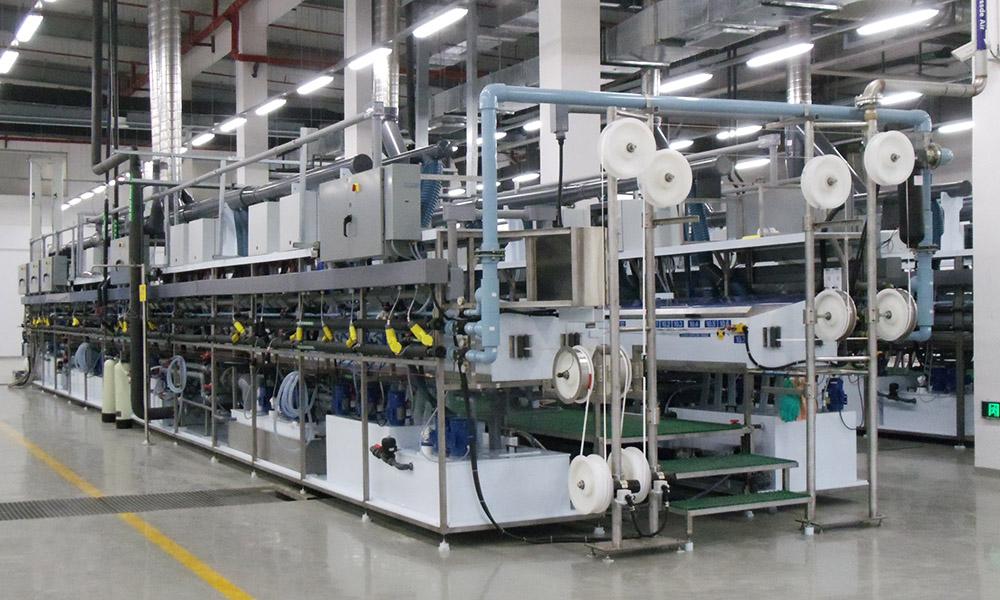
It is also particularly important in tin and tin-lead electroplating, where Varsal’s MSA is designed to support long bath life, stable solder deposits, and high-speed plating operations.
What Is 99% Methanesulfonic Acid?
Varsal’s MSA 99% Anhydrous provides a much higher concentration of Methanesulfonic Acid, with a specification of 99% minimum purity by weight and a typical value of 99.6%.
Like the 70% grade, MSA 99% can function as a solvent and as a catalyst for alkylation, esterification, and polymerization.
The major difference is concentration. Compared with MSA 70%, the 99% grade introduces substantially less water along with the Methanesulfonic Acid.
This can make MSA 99% attractive for processes where a higher acid concentration or greater control over the amount of water introduced into the process is required.
MSA 70% vs. MSA 99%: A Specification Comparison
Although concentration is the most obvious difference, it is useful to look at the broader specifications when evaluating the two grades.
| Specification | Varsal MSA 70% | Varsal MSA 99% |
| Purity | 70% ± 0.5% | 99% min. |
| Typical Purity | 70% | 99.6% |
| Chloride | 10 ppm max. | 50 ppm max. |
| Typical Chloride | 5 ppm | 5 ppm |
| Iron | 5 ppm max. | 10 ppm max. |
| Typical Iron | 3 ppm | 2 ppm |
| Oxidizable Compounds | 20 ppm max. | 20 ppm max. |
| Typical Oxidizables | 14 ppm | 10 ppm |
| Sulfate | 100 ppm max. | 250 ppm max. |
| Typical Sulfate | <30 ppm | <30 ppm |
| Typical Appearance | Clear, colorless liquid | Clear, colorless liquid |
Varsal’s specifications and typical analytical values demonstrate why MSA should be evaluated on more than concentration alone. For example, while the maximum allowable chloride and sulfate specifications differ between the two grades, the typical values are substantially below these limits. Typical chloride is 5 ppm in both grades, while typical sulfate is below 30 ppm in both grades.
Varsal’s MSA 99% also includes a heavy-metals specification of 10 ppm maximum, with a typical value below 1 ppm.
When Does 70% MSA Make Sense?
A 70% aqueous MSA solution can be an excellent fit when the presence of water is compatible with the application and a higher MSA concentration is not required.
One important example is tin and tin-lead electroplating.
Varsal’s MSA process produces material with controlled oxidizable and chloride levels designed to support long bath life and stable solder deposits. The material also provides throwing power suitable for high-speed tin-lead alloy plating in reel-to-reel operations.
MSA 70% can also be used as a solvent or catalyst in chemical processes including alkylation, esterification, and polymerization.
When Does 99% MSA Make Sense?
MSA 99% becomes particularly interesting when a process requires high-concentration Methanesulfonic Acid with substantially less water introduced through the raw material.
Rather than assuming that a higher concentration is always preferable, manufacturers should consider the requirements of the specific process.
Questions to consider include:
- How much water can the process tolerate?
- What acid concentration is required?
- Which trace impurities are critical?
- Will the MSA be diluted during the process anyway?
- Are there downstream steps that are sensitive to water?
- What storage and handling conditions are available?
Answering these questions can help determine whether 70% or 99% MSA is the more appropriate and economical choice.
Don’t Confuse MSA 99% With Methanesulfonic Anhydride (MSAA)
Although the names sound similar, MSA 99% and Methanesulfonic Anhydride (MSAA) are different chemical products.
MSA 99% is high-concentration Methanesulfonic Acid with CAS No. 75-75-2. It remains Methanesulfonic Acid.
Methanesulfonic Anhydride, or MSAA, has CAS No. 7143-01-3 and molecular formula C₂H₆O₅S₂. It is a separate compound supplied as a crystalline solid and used in applications such as pharmaceutical mesylation chemistry.
Understanding this distinction is important when sourcing these materials or specifying them for a chemical process.
Packaging and Storage Considerations
The two MSA grades also have different packaging options.
Varsal’s MSA 70% can be supplied in 25 kg pails, 250 kg plastic drums, 1,000 kg IBCs, or ISO-tank containers.
Varsal’s MSA 99% is standard packaged and capped with nitrogen in 25 kg pails or 250 kg plastic drums, with ISO-tank delivery also optionally available. Conditions of high humidity and elevated temperatures should be avoided.
Packaging and storage should therefore be considered alongside concentration when selecting the appropriate grade.
The Varsal Advantage
Whether a process requires MSA 70% or MSA 99%, consistent product quality and impurity control matter.
Varsal’s MSA manufacturing process is clean, with no methyl mercaptan odor, and our process conditions do not typically allow the formation of methyl esters.
Our MSA products are manufactured with controlled specifications for key impurities and are supported by technical assistance for product evaluation, testing, and application research.
The result is an MSA product line that allows customers to select the concentration and specification that best fit their individual manufacturing requirements.
Which MSA Grade Is Right for Your Application?
Choosing between 70% and 99% Methanesulfonic Acid should begin with the process—not simply with the assumption that higher concentration is better.
MSA 70% provides a versatile aqueous solution for industrial applications, including chemical processing and electroplating.
MSA 99% Anhydrous provides high-concentration Methanesulfonic Acid for applications where substantially reducing the amount of water introduced with the acid is important.
Varsal manufactures and supplies both grades, allowing our team to work with customers to identify the appropriate material for their process.
Contact Varsal to discuss your Methanesulfonic Acid requirements, request technical specifications, or determine whether MSA 70% or MSA 99% is right for your application.