9/2/2026 – Methanesulfonic Acid (MSA) is a strong organic acid used across a variety of industrial and specialty chemical applications. From electroplating and metal finishing to chemical synthesis and catalysis, MSA’s combination of strong acidity, water solubility, and versatility makes it a valuable chemical for manufacturers across multiple industries.
However, not every application requires the same MSA concentration or specification. Understanding the available grades, key quality considerations, and common uses of Methanesulfonic Acid can help manufacturers select the right material for their process.
Varsal manufactures and supplies 70% Methanesulfonic Acid (MSA 70%) and 99% Anhydrous Methanesulfonic Acid (MSA 99%), along with related sulfonyl chemicals including Methanesulfonic Anhydride (MSAA).
What Is Methanesulfonic Acid?
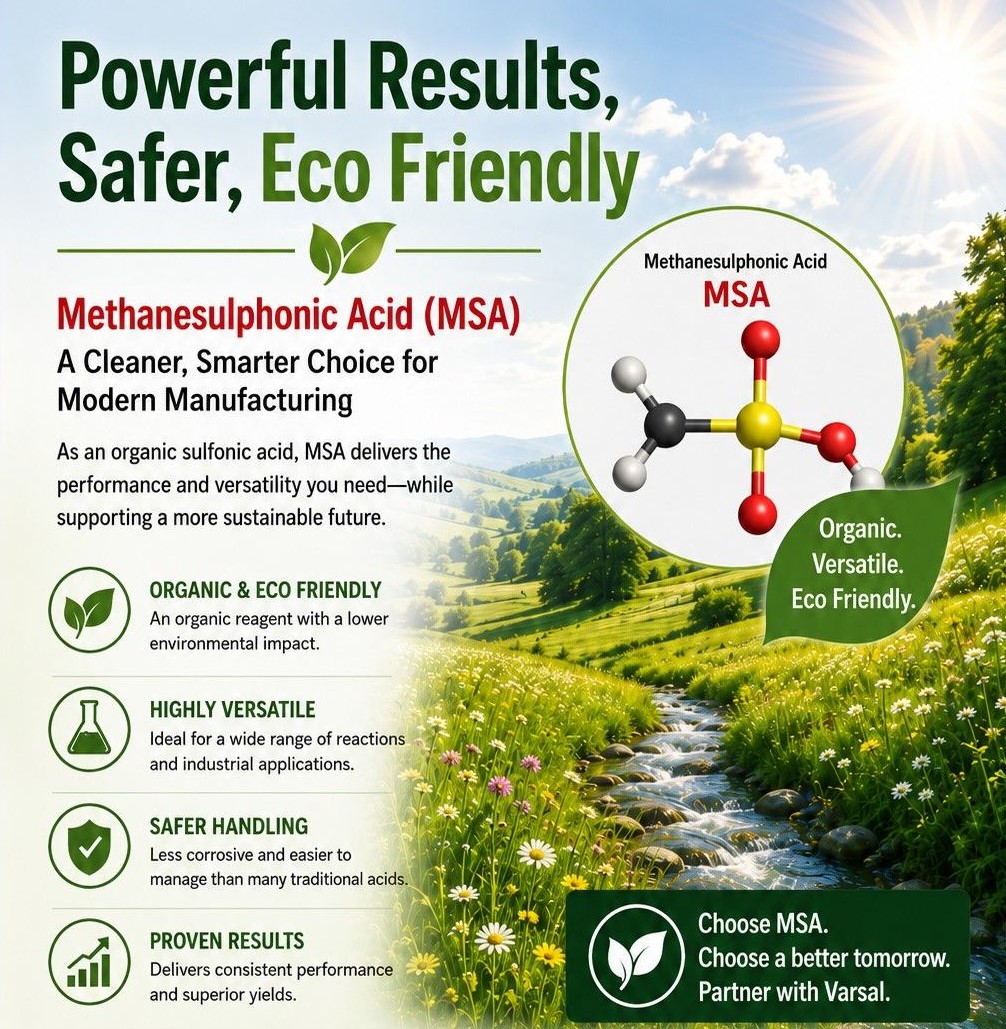
Methanesulfonic Acid, also known as methylsulphonic acid, is a strong sulfonic acid with the molecular formula CH₄O₃S, a molecular weight of 96.10 g/mol, and CAS No. 75-75-2.
Varsal’s MSA is supplied as a clear liquid and is soluble in water. Commercial MSA can be manufactured and supplied at different concentrations depending on the requirements of the application.
Two grades available from Varsal are MSA 70% and MSA 99% Anhydrous.
While both products are Methanesulfonic Acid, their different concentrations allow manufacturers to select the grade most appropriate for their process.
What Is Methanesulfonic Acid Used For?
MSA can perform several functions within industrial chemistry.
Varsal’s technical data identifies Methanesulfonic Acid for use as a solvent and as a catalyst in alkylation, esterification, and polymerization reactions.
Another important application is tin and tin-lead electroplating, where the purity and consistency of the MSA can be especially important to maintaining plating-bath performance.
These characteristics allow MSA to serve manufacturers across a range of chemical and industrial processes.
Methanesulfonic Acid in Electroplating
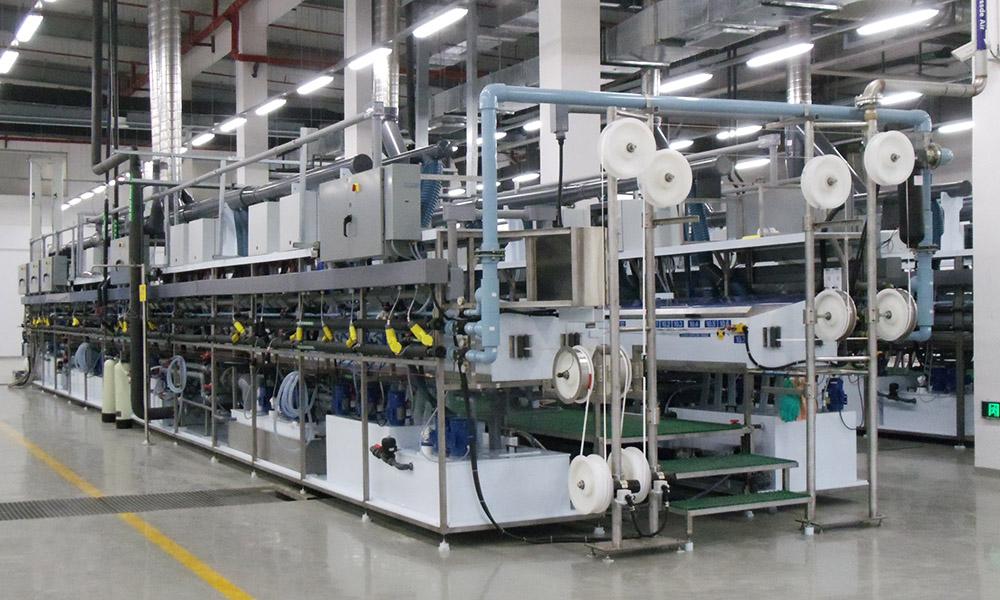
One of the most established industrial uses of MSA is in tin and tin-lead electroplating.
In these systems, characteristics such as impurity control, bath stability, deposit consistency, and throwing power can be important to production performance.
Varsal’s MSA is approved for use in major tin-lead applications. Low oxidizable and chloride levels help support long bath life and stable solder deposits, while the material provides throwing power suitable for high-speed tin-lead alloy plating in reel-to-reel operations.
For manufacturers operating continuous or high-volume plating lines, consistent raw-material quality can therefore be an important consideration when selecting an MSA supplier.
MSA as a Catalyst and Solvent
Beyond electroplating, Methanesulfonic Acid can function as both a solvent and acid catalyst.
Varsal identifies applications including:
- Alkylation
- Esterification
- Polymerization
The appropriate MSA grade depends on the chemistry of the process, including the required acid concentration and the amount of water that can be introduced with the raw material.
This is one reason MSA is available in multiple concentrations.
Understanding MSA 70% and MSA 99%
Varsal supplies both 70% and 99% Methanesulfonic Acid.
MSA 70%
Varsal’s 70% MSA is an aqueous solution specified at 70% ± 0.5% by weight.
This versatile grade is suitable for industrial applications where an aqueous MSA solution is compatible with the process, including electroplating and chemical processing.
MSA 99% Anhydrous
Varsal’s 99% Anhydrous MSA provides a substantially higher concentration of Methanesulfonic Acid. It is specified at 99% minimum purity by weight, with a typical value of 99.6%.
MSA 99% can be useful when a process requires a higher acid concentration or where reducing the amount of water introduced with the MSA is important.
Neither grade is inherently “better” than the other. The appropriate choice depends on the process requirements.
MSA 99% Is Not Methanesulfonic Anhydride
An important distinction should be made between 99% Anhydrous Methanesulfonic Acid and Methanesulfonic Anhydride (MSAA).
MSA 99% remains Methanesulfonic Acid and has CAS No. 75-75-2.
Methanesulfonic Anhydride, or MSAA, is a separate chemical compound with CAS No. 7143-01-3 and molecular formula C₂H₆O₅S₂. Unlike liquid MSA, Varsal’s MSAA is supplied as a crystalline solid and is used in specialized applications including pharmaceutical mesylation chemistry.
Understanding this distinction is important when specifying or sourcing materials for technically demanding chemical processes.
Why Does MSA Purity Matter?
MSA concentration is only one component of product quality.
Depending on the application, trace impurities can also influence process performance. Varsal’s 70% MSA specification controls several important parameters, including:
- Chloride
- Iron
- Oxidizable compounds
- Sulfate
- Color
For example, Varsal’s MSA 70% has a chloride specification of 10 ppm maximum, with a typical value of 5 ppm. Iron is specified at 5 ppm maximum, with a typical value of 3 ppm.
Varsal’s MSA 99% similarly controls chloride, iron, heavy metals, oxidizable compounds, sulfate, and color.
For sensitive industrial and chemical applications, reviewing the complete MSA specification can therefore be more useful than evaluating concentration alone.
The Varsal MSA Manufacturing Advantage
Varsal manufactures Methanesulfonic Acid with an emphasis on consistent quality, controlled impurities, and a clean manufacturing process.
Varsal’s MSA process produces material with no methyl mercaptan odor, and our process conditions do not typically allow for the formation of methyl esters.
For electroplating applications, low oxidizables and chlorides support long bath life and stable solder deposits, while the material’s throwing power supports high-speed tin-lead alloy plating.
Varsal also provides technical support for testing, product evaluation, and application research.
Choosing the Right Methanesulfonic Acid Grade
Selecting an MSA grade should begin with the requirements of the process.
Manufacturers should consider:
- Required MSA concentration
- Water tolerance
- Trace impurity requirements
- Intended application
- Packaging and consumption volume
- Storage and handling requirements
For many industrial applications, MSA 70% provides a versatile aqueous option. When a higher concentration or significantly reduced water content is required, MSA 99% Anhydrous may be more appropriate.
Varsal manufactures both grades and can work with customers to evaluate the right MSA specification for their application.
Looking for a reliable Methanesulfonic Acid supplier? Contact Varsal to discuss your MSA requirements, request technical specifications, or determine which grade is right for your process.